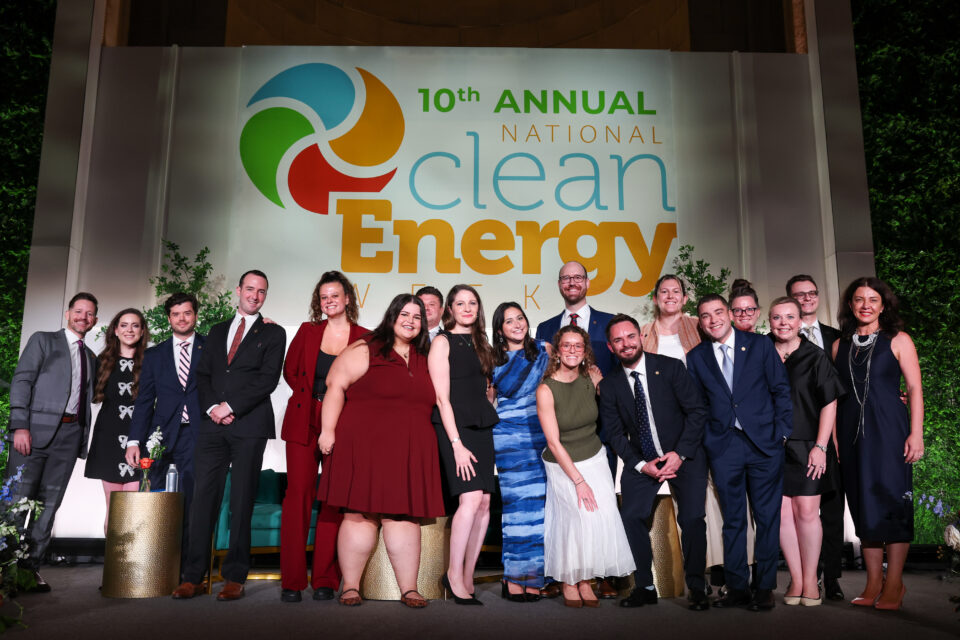
Ten years ago, a handful of leaders believed clean energy deserved a national stage and took a chance on bringing that conversation to the heart of Washington. Not knowing how many people would show up, they launched the first National Clean Energy Week (NCEW).
A decade later, NCEW’s 2026 Policymakers Symposium marked its most successful year yet, bringing together six governors, 11 members of Congress and 65 industry leaders to discuss America’s growing energy needs and the role an all-of-the-above approach can play in meeting them.
The conversation also went well beyond Washington. Governors in over 25 states and the Mayor of the District of Columbia issued proclamations recognizing Clean Energy Week, highlighting the jobs, economic opportunity, reliability and affordability that energy development brings to their states. Those same topics were at the center of discussions throughout the two-day Policymakers Symposium.
However, the biggest story of our 10th annual celebration was not how many people were in the room or even the top officials on stage. It was the consensus being found in the discussions surrounding American energy needs. Despite the diversity of political outlooks and approaches, speakers across NCEW agreed that more clean energy technologies will help the U.S. achieve a resilient, competitive and affordable clean energy system capable of meeting the challenges ahead.
The shift in energy action in Washington over the past decade was evident. Senator John Curtis (R-Utah), one of NCEW’s earliest champions and founder of the Conservative Climate Caucus, reflected on a time when a Republican who even mentioned “climate” could be laughed out of the room. Today, the conversation is increasingly focused on practical questions that address both climate and energy security: How do we ensure energy abundance while protecting our natural spaces and strengthen America’s position as a global energy leader?
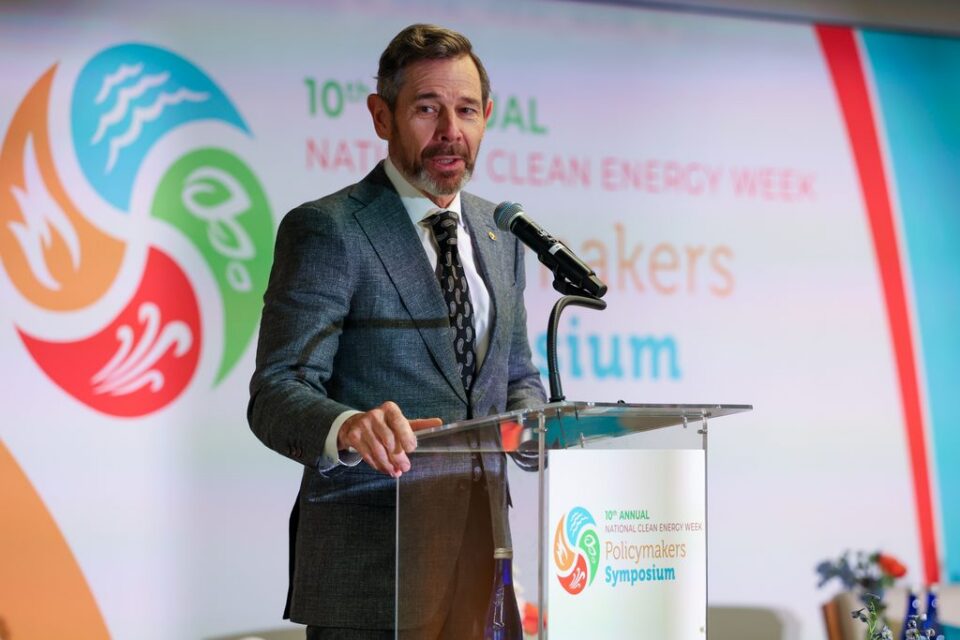
Abundance is a key challenge, and as speakers from every panel noted, demand is only rising. The North American Electric Reliability Corporation (NERC) projects that summer peak power demand will increase 24% over the next decade, driven in part by data centers, manufacturing and electrification. At the Policymakers Symposium, Constellation’s David Brown, SVP of Federal Government Affairs and Public Policy, put the scale of the challenge in simple terms: triple renewables, triple nuclear, triple gas and we will still probably need more. When that’s the demand forecasted, sorting the technologies into winners and losers is no longer a viable strategy. The focus must be to add electrons to the grid as efficiently as possible, using every resource available.
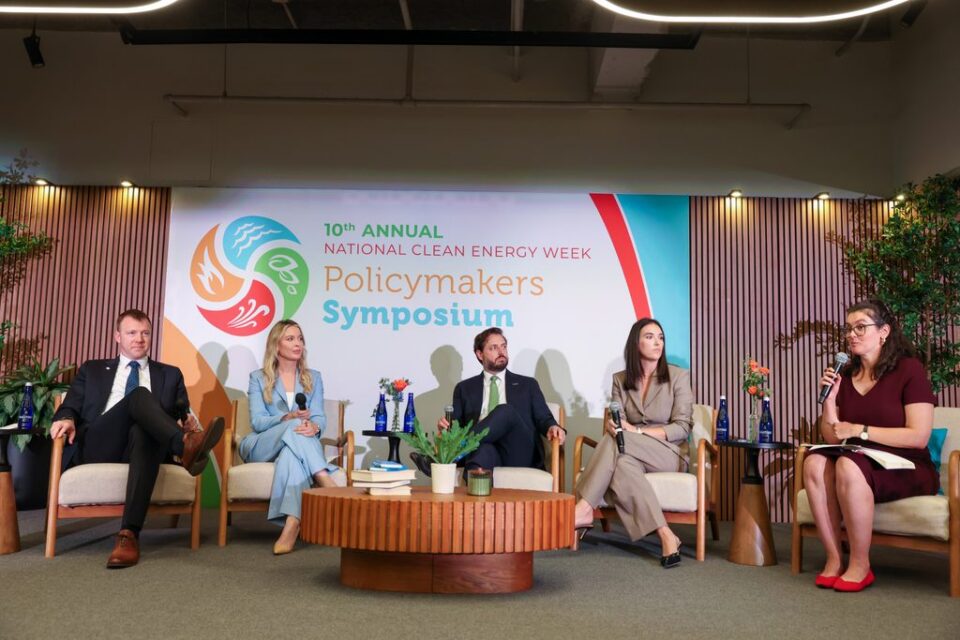
That same theme carried through conversations about federal policy. Industry leaders repeatedly emphasized the need for policies that are predictable, transparent and technology neutral. Malcolm Woolf, President and CEO of the National Hydropower Association, offered a striking example of the barriers facing existing energy infrastructure: relicensing an existing hydropower facility can take longer than licensing a new nuclear plant, with the process taking eight years on average and often more than 10.
Jason Grumet, CEO of the American Clean Power Association, framed the challenge another way, calling on Congress to ensure that no president, now or in the future, can weaponize energy policy for ideological ends. With more than $1.1 trillion in infrastructure projects awaiting federal permits, industry leaders made the case that permitting reform can reduce costs, provide greater certainty for investors and developers and strengthen American competitiveness.
Accelerating the deployment of innovative energy technologies was another recurring theme throughout the week. Rep. Susie Lee (D-Nev.) pointed to geothermal as the technology uniting all Americans. Alex Fitzsimmons, Associate Deputy Secretary of Energy, noted that some fusion companies may beat some fission companies to market. The consensus was that America’s spirit of innovation is alive and well and federal policy’s role is to remove barriers and support these technologies to get them deployed faster.
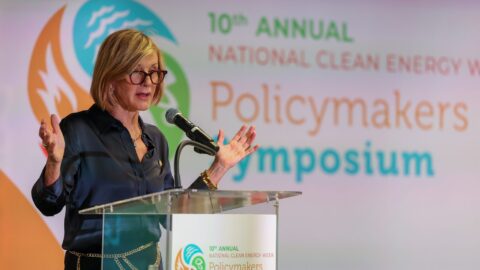
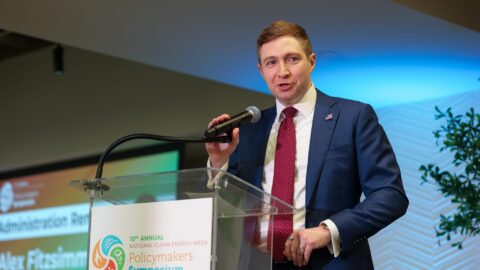
The undercurrent across the entire Symposium was America’s competitive edge in a turbulent world. Rep. Jake Auchincloss (D-Mass.) made the case directly stating energy is the primary input to the economy. Whether you care about reducing poverty, strengthening American manufacturing, expanding diplomatic leverage or addressing climate action, affordable and abundant energy is foundational. He framed the global competition stakes just as simply — China is good at building and, America is good at innovating but the country that gets good at both is the country that wins. That competitive edge ultimately rests on everything else discussed at this year’s NCEW: a technology neutral approach, policy predictability and accelerating innovation.
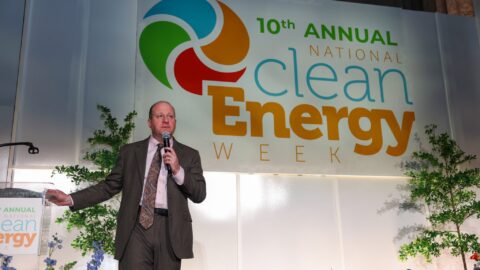
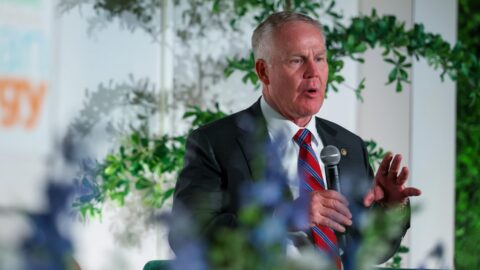
Outside of the Policymakers Symposium, NCEW and the Nuclear Energy Institute’s Nuclear Matters were proud to host the Young Professionals Happy Hour at The Dubliner, bringing together more than 150 young energy professionals from industry and government. Celebrations of NCEW closed in D.C. with a VIP Reception and Dinner at the Mellon Auditorium, where more than 300 leaders heard remarks from Gov. Jared Polis (D-Colo.) and a fireside discussion with Sen. Alan Armstrong (R-Okla.) on the high-stakes surrounding permitting reform.
Ten years ago, NCEW was an idea and a bet that Washington could have an appetite for a different conversation about energy. A decade later, that conversation has grown far beyond what its founders could have imagined, with governors across the country recognizing Clean Energy Week, leaders from across the political spectrum working together and an increasingly innovative energy industry advocating for solutions. Now, it is up to all of us to keep that conversation going, turn consensus into action and build what comes next.